Home Brewing Supplies
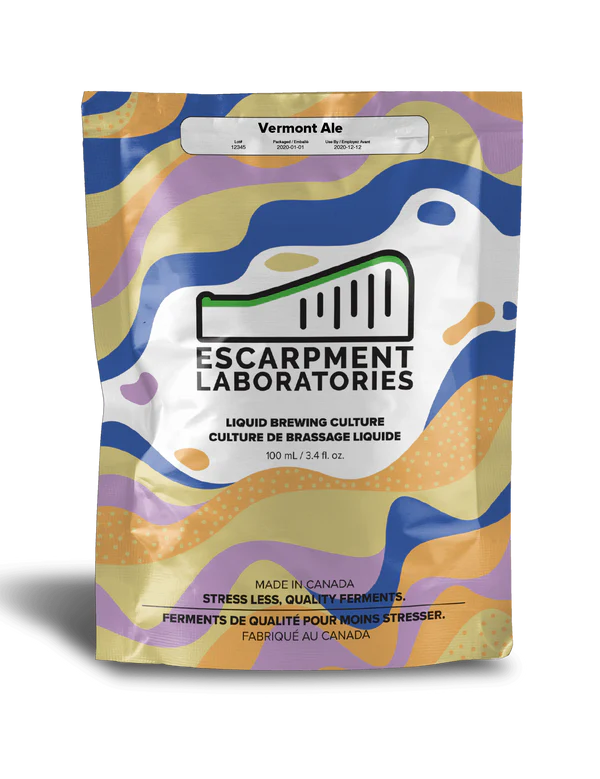
Liquid Yeast – Escarpment Vermont Ale
$21.99
| Weight | 0.153 kg |
|---|---|
| Dimensions | 15 × 2 × 20 cm |
| Yeast Type | Liquid Yeast |
| Strain | Ale |
| Flocculation | Medium |
| Alcohol Tolerance | High |
| Temperature Range | 19-22°C |
| Attenuation | 73-83% |
Escarpment Laboratories Vermont Ale – Liquid Ale Yeast
Escarpment Vermont Ale is a popular liquid yeast for brewers who love juicy, hop-forward beers with a soft mouthfeel and expressive fruit character. Originating from the famous “Vermont” lineage, this strain is known for pushing out big tropical and stone-fruit aromatics while still finishing clean enough that your malts and hops can shine.
This yeast is especially well-suited to modern North American styles where hop aroma is the star: hazy IPAs, Pale Ales, and juicy Double IPAs, but it can also work nicely in fruit-forward American Wheat beers or hoppy Blonde Ales. If you’re brewing anything you’d describe as “juicy,” “soft,” or “New England–inspired,” this is a very reliable go-to.
What Makes Vermont Ale Yeast Unique?
Vermont Ale is known for its high alcohol tolerance and strong fermentation performance, making it a good choice for higher-gravity IPAs and DIPAs that you still want to taste soft and approachable. The medium flocculation means it doesn’t drop crystal clear on its own right away, which actually helps maintain a stable haze and fuller body in NEIPAs and hazy Pale Ales.
Flavour-wise, you can expect stone fruit (apricot, peach) and soft tropical notes, with some light citrus depending on your hopping choices. It’s not a phenolic strain, so you won’t get clove or pepper spice – just clean, fruity esters. This makes it non-phenolic and a great choice when you want fruit character from yeast without Belgian-style spice.
Recommended Styles & Pairings
Some styles that work particularly well with Escarpment Vermont Ale:
- New England IPA / Hazy IPA
- Juicy Pale Ale
- Hazy Double IPA / Triple IPA
- Hoppy Blonde Ale
- American Wheat or Hoppy Wheat
Hop pairing ideas:
- Classic NEIPA combos: Citra, Mosaic, Galaxy, Amarillo
- Modern fruit-forward blends: Sabro, Strata, Nelson Sauvin, El Dorado
- Old-school meets new-school: Cascade or Centennial blended with newer tropical varieties for depth
On the malt side, Vermont Ale works well with a soft, supportive grist:
- Pale Ale or Pilsner base malt
- Generous amounts of flaked oats or wheat for body and haze
- A touch of light crystal or chit malt if you want more mouthfeel and head retention
How to Ferment with Vermont Ale
Escarpment lists a temperature range of 19–22°C, which is where this yeast really shines:
- 19–20°C: Cleaner profile, restrained esters, good for slightly drier and “cleaner juicy” IPAs or Pale Ales.
- 21–22°C: More expressive fruit character, great if you really want the yeast to contribute noticeable peach and tropical aromatics.
Expect medium to high attenuation depending on wort composition and mash temperature. It’s not a diastatic strain, so it will not over-attenuate like a saison yeast. Medium flocculation means it will stay in suspension long enough to help with biotransformation in dry-hopped beers, but you’ll still be able to drop most of it out with a cold crash.
General tips:
- Pitch a healthy starter for higher-gravity IPAs or DIPAs, especially above 1.065–1.070 OG.
- Consider oxygenating well at pitch for strong, consistent fermentations in big beers.
- Dry hop during active fermentation (24–72 hours in) if you want strong biotransformation and saturated hop aroma.
- Cold crash after fermentation and dry hopping to help drop some yeast and hop matter, while maintaining haze.
When to Choose Vermont Ale Over Other Strains
You’d pick Vermont Ale over a more neutral American ale strain (like a classic “Chico” style yeast) when you want more fruit character and a softer profile, but still don’t want full-on English esters. It sits nicely between a clean West Coast ale yeast and a more characterful English strain.
It’s also a strong choice for mixed-fermentation projects where you want a reliable primary fermentation with good attenuation and fruity esters before adding Brett or souring cultures. Since it’s not phenolic and not diastatic, it plays fairly predictably in blends and won’t creep down in gravity for months like some saison or Brett-heavy ferments.
If your goal is juicy, hazy, and aromatic hop-forward beers that finish with a pillowy mouthfeel and bright fruit character, Escarpment Vermont Ale is a dependable workhorse with enough personality to make your IPAs stand out, without being tricky to manage in the fermenter.