Home Brewing Supplies
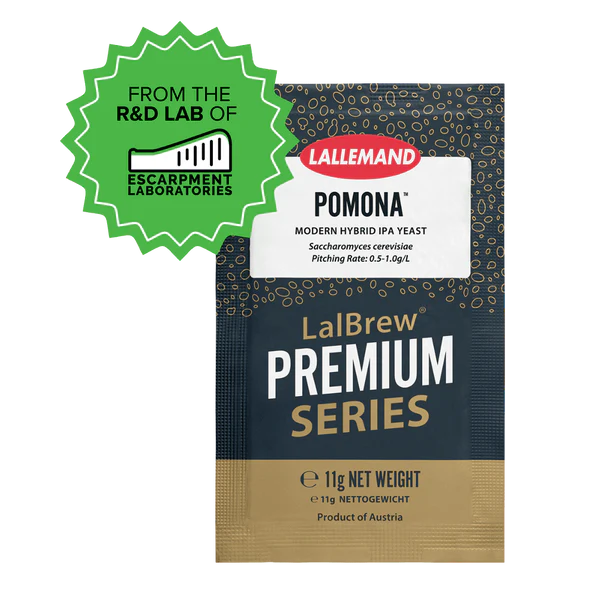
Yeast – Escarpment Lalbrew Pomona – 11g
$15.49
| Weight | 0.153 kg |
|---|---|
| Dimensions | 15 × 2 × 20 cm |
| Yeast Type | Dry Yeast |
| Strain | Ale |
| Flocculation | Medium |
| Alcohol Tolerance | 12-14% |
| Temperature Range | 18–22°C |
| Attenuation | 75–84% |
Escarpment LalBrew Pomona – 11 g Dry Ale Yeast
Escarpment LalBrew Pomona is a modern dry ale yeast designed for brewers who want bright stone-fruit character in their beers without sacrificing reliability. Made by Escarpment Laboratories, this strain is tailored for hop-forward styles, especially hazy and juicy ales, while still staying versatile enough for a broad range of modern craft beers. If you like soft, fruity, expressive yeast character that plays nicely with hops, Pomona is a great tool to have on your shelf.
This is a dry ale yeast with medium flocculation, 12–14% alcohol tolerance, and a recommended fermentation range of 18–22°C. It’s designed for clean, reliable performance with a juicy aroma profile that leans into peach, apricot, and other stone fruits. Think along the lines of New England IPAs and fruit-forward pale ales, without the heavy phenolic spice you’d get from Belgian strains.
What Makes LalBrew Pomona Unique?
Pomona is all about fruity expression and hop support. It tends to highlight:
- Stone fruit – peach, nectarine, apricot
- Tropical notes when paired with modern hops (mango, passionfruit, guava)
- Soft mouthfeel that suits hazy, juicy styles
Unlike some older English-style strains, Pomona is generally clean in the background with focused fruitiness and minimal sulphur. Compared to neutral American ale yeasts, it gives you more character and aroma without becoming fusel or overly estery when fermented in its preferred range. It’s a practical choice if you want a dependable dry yeast that still adds personality to your beer.
Recommended Beer Styles
LalBrew Pomona is ideal for:
- New England / Hazy IPA
- Juicy Pale Ale
- Hazy or modern session ales
- Fruit IPAs or Pale Ales (apricot, peach, mango, passionfruit)
- Modern Blonde Ales with a bit more fruit character
- Milkshake IPAs and smoothie-style beers
Because of its respectable 12–14% ABV tolerance, it can also handle bigger IPAs and double IPAs if you treat it well (good aeration, healthy pitch). If you’re brewing something hop- and aroma-focused where clarity isn’t the top priority, Pomona fits in nicely.
Fermentation Tips & Performance
Pomona performs best in the 18–22°C range. Where you sit in that range will shape your flavour:
- 18–19°C: cleaner profile, balanced fruit, good for pale ales and more restrained styles.
- 20–22°C: more expressive stone-fruit esters, great for hazy IPAs and juicy beers.
With medium flocculation, expect a naturally hazy beer, especially if you’re using high-protein grains like oats and wheat. It should drop enough to be manageable, but it’s not a “brilliantly bright” strain on its own—perfect for NEIPA-style haze. Attenuation will typically land in the medium-to-high range (style and wort-dependent), giving a soft, slightly fuller mouthfeel without finishing overly sweet if your mash and recipe are dialled in.
Alcohol tolerance up to 12–14% means it can handle strong IPAs and bigger specialty ales. As always, for higher-gravity beers, make sure you:
- Oxygenate or aerate the wort well.
- Pitch enough yeast (use the full 11 g pack for standard 19–23 L homebrew batches; consider two packs for high-gravity brews).
- Keep fermentation temperature steady to avoid hot alcohols.
How to Use LalBrew Pomona
Being a dry yeast, Pomona is simple to use:
- Rehydration is recommended, but not strictly required for standard-strength worts. If rehydrating, use clean, warm water (typically around 25–30°C) and let it sit for 15–20 minutes before pitching.
- Pitch directly into the wort if you prefer—just make sure the wort is well aerated, especially for OG above 1.060.
- Keep fermentation within 18–22°C for clean, fruity expression.
Pomona is a non-phenolic strain (it won’t add clove or pepper spice) and is not known as a diastatic strain, so it won’t over-attenuate like some saison or wild-type yeasts. This makes it a safer option if you’re concerned about over-dry beers or cross-contamination in your equipment. It’s suitable as the primary strain in mixed-fermentation projects if you want a fruity base before adding Brett, bacteria, or other secondary cultures.
Pairing with Hops, Malt & Other Strains
To get the most from Pomona, pair it with ingredients that play up its stone-fruit and tropical character:
- Hops: Citra, Mosaic, Galaxy, Nelson Sauvin, Amarillo, Sabro, El Dorado, Idaho 7, and Azacca all work very well.
- Malt & Adjuncts: Pale malt with oats, wheat, and a bit of light crystal or chit malt can help build that juicy, soft profile. For IPAs, chloride-leaning water profiles will support mouthfeel.
- Blending: You can co-pitch or blend Pomona with a more neutral American strain if you want to soften its fruitiness, or with a light, fruity British strain for a slightly more complex ester profile.
If you’re experimenting with split batches, Pomona is a good candidate to compare against neutral American ale yeast (like US-05 style strains). You’ll get a clear sense of how much extra fruit and softness it brings to the same wort.
Why Choose Pomona Over Other Strains?
Choose Escarpment LalBrew Pomona if you want:
- A dry yeast that’s easy to store, easy to pitch, and doesn’t require a starter for standard-strength beers.
- A fruity, modern ale profile that suits hazy and juicy styles.
- Medium flocculation and natural haze without overly stubborn yeast in suspension.
- Good alcohol tolerance for bigger IPAs and specialty ales.
- A non-phenolic, non-diastatic option that’s safer and easier to manage in a home brewery setup.
If you’ve been brewing hazy IPAs with more neutral or classic American strains and feel like something’s missing in the fruit and mouthfeel department, Pomona is a practical, approachable next step. It gives you a more expressive, modern profile while staying predictable and easy to work with—just what many home and small-batch brewers are after.