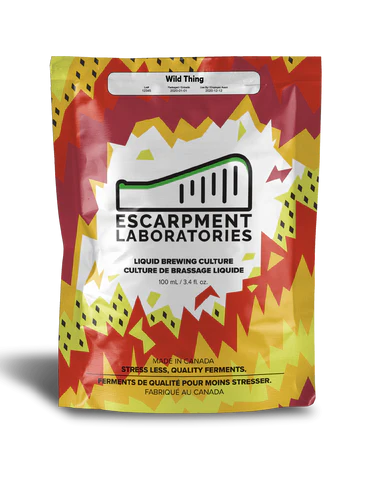
Liquid Yeast – Escarpment Wild Thing
Original price was: $21.99.$19.99Current price is: $19.99.
| Weight | 0.153 kg |
|---|---|
| Dimensions | 15 × 2 × 20 cm |
| Yeast Type | Liquid Yeast |
| Strain | Kveik |
| Flocculation | Medium |
| Alcohol Tolerance | High |
| Temperature Range | 22-27°C |
| Attenuation | 70–80% |
Escarpment Laboratories Wild Thing – Liquid Yeast
Escarpment Wild Thing is a fun, characterful liquid yeast for brewers who want some rustic, “fermy” character without going full mixed-culture or sour. Developed by Escarpment Laboratories in Ontario, this strain brings moderate fruity esters and a touch of rustic farmhouse character, while still finishing clean enough to keep your hops and malt in focus. Think saison-adjacent, but more approachable and easier to control.
Wild Thing is designed for modern farmhouse, saison, rustic Pale Ale, and experimental mixed-fermentation-inspired beers. It’s a great way to introduce some complexity into your beer without committing to Brett or long ageing. If you like the idea of wild and funky beer but still want something that’s easy to drink and easy to brew, this is a very handy strain to have in your yeast fridge.
Flavour Profile & Fermentation Character
This strain brings a mix of stone fruit and light tropical esters with a soft, earthy edge. Depending on your mash profile and fermentation temperature, you’ll get:
- Fruity esters: apricot, light citrus, and soft pear notes.
- Rustic character: gentle farmhouse, slightly “wild” profile without heavy phenolics.
- Dry finish: good attenuation, giving a crisp, highly drinkable beer.
Escarpment Wild Thing is typically medium to high attenuation (often in the 76–82% range, depending on wort composition) and medium flocculation. It will usually clear with a bit of cold conditioning, but don’t be surprised if the beer stays slightly hazy. Alcohol tolerance is in the 6–8% ABV sweet spot, making it ideal for table saisons, farmhouse ales, grisettes, and rustic IPAs.
Best Styles & Recipe Ideas
Wild Thing works well anywhere you want some character and a dry, refreshing finish. Consider it for:
- Modern Farmhouse Ales: dry, fruity, lightly rustic, not as peppery as classic saison strains.
- Table Saisons & Grisettes: low-ABV, crushable, with plenty of flavour and a snappy finish.
- Rustic Pale Ales & IPAs: hop-forward beers with a slightly wild edge.
- Mixed-Fermentation-Inspired Ales: beers meant to mimic wild character without long ageing or Brett.
If you’re brewing a beer to pair with food—cheese boards, roast chicken, grilled veggies, or seafood—this yeast shines. It brings enough complexity to make the beer interesting, but it doesn’t dominate like some aggressively phenolic Belgian strains.
Fermentation Tips & Temperature Range
To get the best out of Escarpment Wild Thing, treat it like a saison or farmhouse strain with a bit more flexibility:
- Temperature: Aim for 18–24°C.
- At the lower end (18–20°C): cleaner profile, softer fruit, less rustic character.
- At the higher end (21–24°C): more fruit, more farmhouse character, drier finish.
- Pitching rate: A standard ale pitch rate works well. You can pitch slightly lower than a clean ale strain if you want to encourage a bit more ester production.
- Oxygenation: Give it a good dose of oxygen for stronger or drier beers to avoid sluggish finishes.
- Diacetyl: Not typically a big producer, but still give it a brief rest at fermentation temp to clean up before chilling.
This strain is not strongly phenolic in the way of classic Belgian saison strains, and it is not diastaticus, so it won’t keep chewing on your beer indefinitely. That makes it a good choice if you like farmhouse character but still want predictable final gravity and carbonation.
Pairing with Hops, Malt & Other Yeasts
Wild Thing plays nicely with a wide range of ingredients:
- Hops:
- For modern farmhouse or rustic IPAs: pair with Citra, Mosaic, Amarillo, Sabro, or Nelson Sauvin for a bright, fruity profile.
- For more traditional farmhouse beers: use Saaz, Styrian Goldings, Hallertau, Tettnang, or East Kent Goldings.
- Malt:
- Base: Canadian 2-row or Pilsner malt.
- Character: a bit of Munich, Vienna, or wheat adds body to balance the dry finish.
- Adjuncts: small amounts of oats or spelt enhance mouthfeel in low-ABV farmhouse beers.
- Blending & mixed fermentation:
- Works well as a primary strain before adding Brett or bacteria.
- Can be blended with a clean strain (like a neutral American ale yeast) to soften the rustic character while keeping good attenuation.
If you want to experiment with mixed fermentations, Wild Thing is a solid “base yeast” to set the stage. It provides fruity, rustic character and dryness, which Brett and sour cultures can build on later. It’s suitable for mixed ferments, but it is not itself a Brett or sour blend.
Why Choose Wild Thing?
Choose Escarpment Wild Thing if you’re looking for more personality than a standard ale yeast but don’t want the full peppery punch and higher maintenance of classic saison strains. It’s ideal for:
- Homebrewers who enjoy saisons and farmhouse beers but want something easier to manage and more forgiving.
- Brewers who like to experiment with rustic Pale Ales, farmhouse IPAs, and table beers.
- Anyone curious about lightly wild, fruity, dry beers that don’t require years in a barrel.
Compared to other similar strains, Wild Thing offers a nice middle ground: more character than clean American ale yeast, less phenolic and demanding than classic Belgian saisons. It’s a practical, fun choice if you want to push your recipes in a more rustic direction while keeping fermentation times and results predictable.