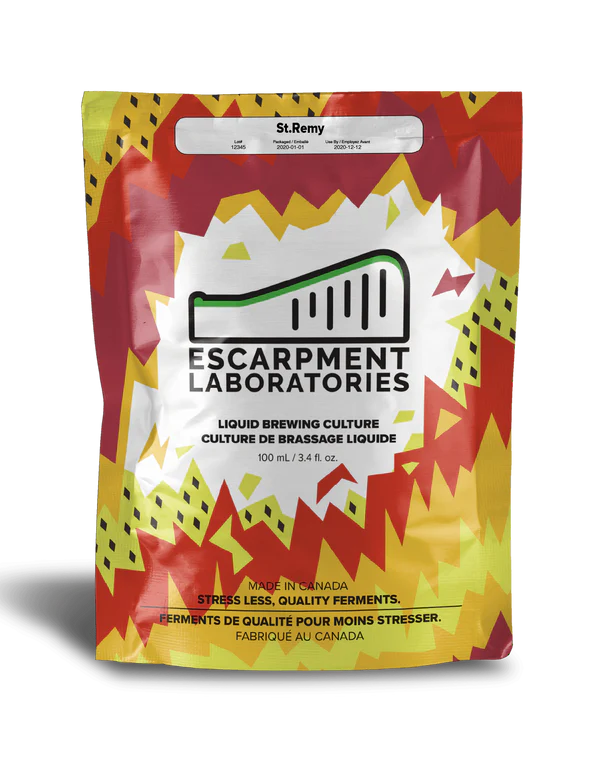
Liquid Yeast – Escarpment St Remy Abbey Ale
Original price was: $21.99.$19.99Current price is: $19.99.
| Weight | 0.153 kg |
|---|---|
| Dimensions | 15 × 2 × 20 cm |
| Yeast Type | Liquid Yeast |
| Strain | Other |
| Flocculation | Medium |
| Alcohol Tolerance | Medium |
| Temperature Range | 18-24°C |
| Attenuation | 72-80% |
Escarpment St Remy Abbey Ale – Liquid Yeast
Escarpment St Remy Abbey Ale is a Belgian abbey strain for brewers who love rich, malt-forward Belgian beers but don’t want the heavy clove and pepper character you get from many traditional Belgian yeasts. This is a rare non-phenolic Belgian ale strain, which means you still get those classic mixed fruity esters—think dark fruit, stone fruit, a bit of berry—without the spicy phenols. It’s a great choice if you’re aiming for a smoother, fruitier Belgian profile that really lets your malt bill shine.
Each pouch from Escarpment Labs comes with >180 billion cells, so you’re working with a proper pitching rate for a standard-strength batch. With medium attenuation (72–80%) and medium alcohol tolerance, St Remy Abbey Ale will give you a full, rounded body with enough dryness to keep big beers drinkable, but not thin. The medium flocculation helps the yeast clean up nicely, though like most Belgian strains, it may stay a little hazy, especially at higher temps or in big, complex worts.
Best Styles for St Remy Abbey Ale
This strain is ideal if you’re brewing:
- Belgian Dubbel – deep malt, dark fruit, and a soft finish without clove or pepper dominating.
- Belgian Dark Strong / Quad – supports rich caramel, raisin, and fig flavours from your malt and candi sugar.
- Belgian Blond / Belgian Pale – when you want approachable fruitiness with a gentle malt focus.
- Belgian-style Brown or Abbey Ale – complex, malty, and smooth, with clean fermentation character.
If you’ve ever thought “I like Belgian beers, but I’m not always in the mood for big spicy notes,” this strain hits a really nice middle ground. It keeps the Belgian character but steers things more towards fruit and malt than spice.
Fermentation Profile & How to Use It
St Remy Abbey Ale is designed to ferment comfortably in the 18–24ºC (65–75°F) range:
- Lower end (18–20ºC): cleaner profile, more balanced malt character, and slightly less ester expression.
- Mid–upper range (21–24ºC): more pronounced fruity esters—great for Dubbels and Quads where you want that rich, fruit-forward nose.
The strain has a medium fermentation rate, so don’t be surprised if it’s not as aggressively fast as some English or American ale yeasts. It still gets the job done reliably; just give it adequate time, especially on higher gravity beers. A good approach is:
- Pitch on the cooler side (18–19ºC) to avoid any hot, messy fermentation start.
- Let the fermentation naturally rise a couple of degrees after 24–48 hours.
- Hold it in the low 20s until final gravity is reached to help it attenuate into that 72–80% range.
This yeast is non-diastatic, so it won’t over-attenuate or dry your beer out like some saison or super-attenuative Belgian strains. It’s also non-phenolic, so it won’t produce the classic “Belgian spice” character (clove, pepper, etc.). That makes it especially forgiving and easy to work with if you’re newer to Belgian styles or don’t want to manage phenolic intensity with mash and fermentation tweaks.
Pairing with Malts, Hops, and Other Yeast
The flavour profile is described as fruity and malt-forward, so it really shines with richer, more complex malt bills. Good partners include:
- Base Malts: Belgian Pilsner, Vienna, or Munich for a solid, bready foundation.
- Specialty Malts: Aromatic, Special B, biscuit, and medium–dark crystal malts for caramel, raisin, and toasted bread notes.
- Adjunct Sugars: Dark or amber candi sugar/syrup, demerara, or turbinado to boost ABV and bring a layered dark fruit character without making the beer cloying.
For hops, this yeast works best with classic European varieties that stay in the background:
- Noble / Euro hops: Styrian Goldings, Saaz, Tettnang, Hallertau, or East Kent Goldings.
- Bitterness levels in the modest to moderate range keep the focus on malt and yeast character.
Biotransformation is low, so this isn’t the strain to reach for if you’re chasing heavy hop-forward hazy IPAs or layered hop biotransformation flavours. It’s also not typically used for mixed fermentations—it’s not diastatic, doesn’t bring Brett-like character, and is really built for clean but expressive abbey-style ales. If you want to experiment, you could co-pitch or stagger fermentation with a spicy, phenolic Belgian strain (for example in a split-batch), but on its own, St Remy is all about clean, fruity malt-forward Belgian character.
Why Choose St Remy Abbey Ale?
St Remy Abbey Ale is a strong fit if you:
- Like Belgian beers but don’t always want heavy clove/pepper phenolics.
- Are brewing a Dubbel, Quad, or Belgian dark ale and want the yeast to support dark fruit and malt, not overpower it.
- Prefer a reliable, medium-attenuating strain that won’t over-dry your beer.
- Want a slightly more approachable, smooth Belgian profile for sharing with friends who might be new to Belgian styles.
Compared to other abbey and Trappist-style yeasts, this Escarpment strain stands out because it’s non-phenolic yet still distinctly Belgian</strong. It lets your recipe design do the talking—malts, sugars, and fermentation schedule—while adding a nicely layered fruitiness that fills in the gaps. If your goal is a rich, comforting Belgian ale that’s complex but not aggressive, St Remy Abbey Ale is a very solid, brewer-friendly choice.